Search engines no longer rank pages in isolation. They evaluate your entire site to determine whether you genuinely understand a topic or just touch on it. This shift means that scattered blog posts and disconnected content pages are losing ground to sites with clear topical structure.
An SEO topical map is a visual framework that organizes content around core topics and their related subtopics. It shows search engines and AI systems that your site offers depth and expertise across a subject area. As AI search optimization becomes the standard, building a topical map is no longer optional for serious organic growth.
This guide explains what an SEO topical map is, why it matters for AI and search engine optimization, and how to build one that strengthens your site’s authority and visibility.
What Is an SEO Topical Map?
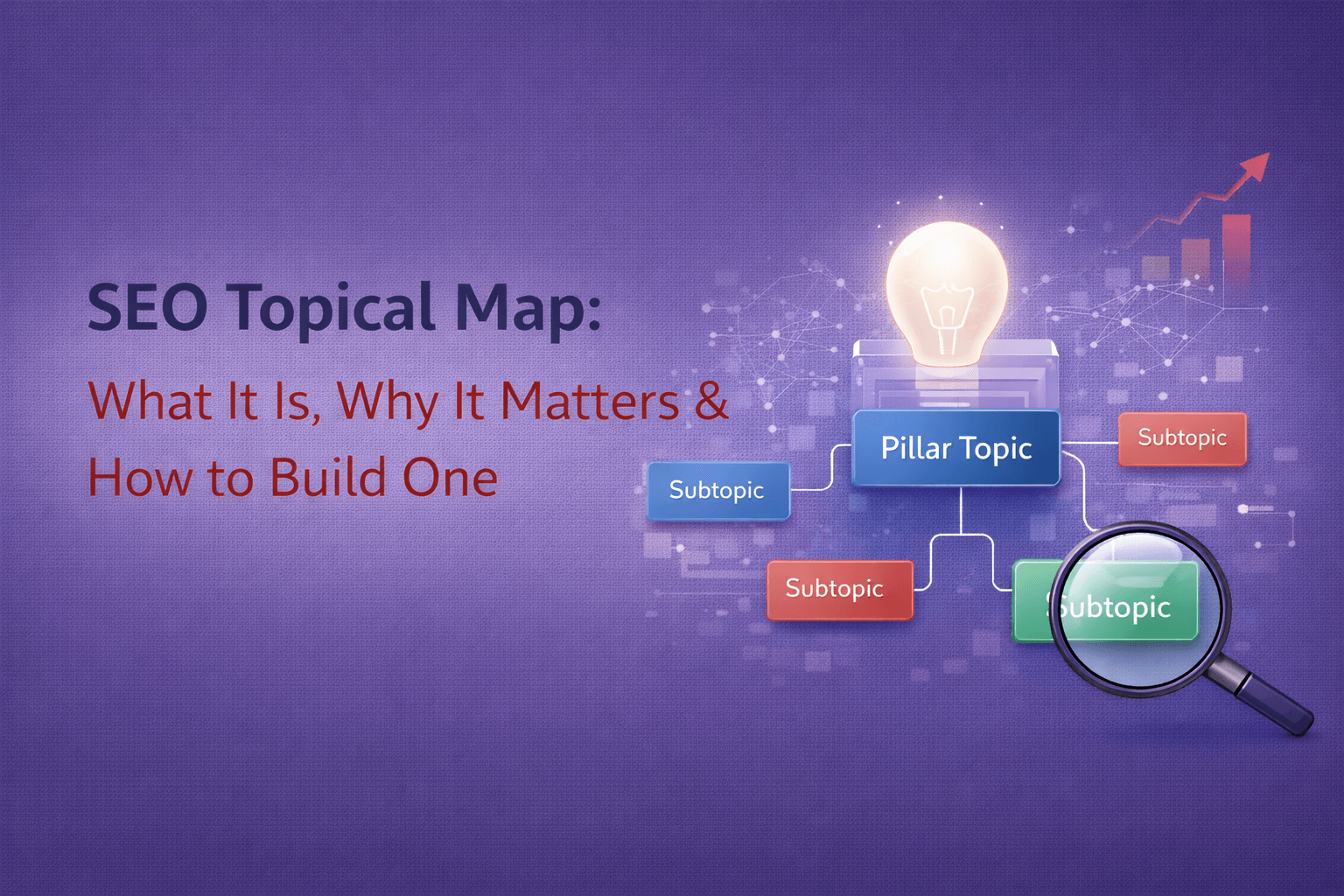
An SEO topical map is a strategic content framework that connects a pillar topic to supporting subtopics through internal links and semantic relationships. Instead of writing random articles, you create clusters of content that comprehensively cover a subject.
Each cluster includes a pillar page that covers the main topic broadly and several supporting pages that address specific questions or aspects. These pages link to each other, signaling to search engines that your site has organized expertise on the topic.
Topical maps differ from traditional keyword-based strategies. Rather than targeting isolated keywords, you build authority across an entire subject. This approach aligns with how modern search algorithms and AI search engine optimization tools evaluate content quality and relevance.
Why SEO Topical Maps Matter for Search Visibility?
Google and other search systems reward sites that demonstrate topical authority. When your content thoroughly covers related concepts, search engines interpret your site as a reliable source. This improves rankings across all pages in the cluster, not just individual posts.
Topical maps also improve how AI systems understand your site. Platforms like ChatGPT, Perplexity, and Google’s AI Overviews pull information from sites with clear subject expertise. If your content lacks structure, AI may skip it entirely or misinterpret what you offer.
Building a topical map creates several ranking advantages. It increases internal linking opportunities, keeps visitors on your site longer, and makes it easier for crawlers to discover and index your content. These factors combine to improve both traditional SEO and AI search optimization performance.
How Topical Maps Support AI Search Optimization?
AI-driven search systems form opinions about your site based on how well you explain topics and connect related ideas. A topical map gives AI the context it needs to understand your expertise and cite your content in generated answers.
When using AI search engine optimization tools, a well-structured topical map makes it easier to identify content gaps and opportunities. These tools analyze how thoroughly you cover a subject compared to competitors, and a topical map provides the foundation for competitive analysis.
Topical maps also support generative AI search engine optimization. AI models prefer content that clearly defines entities, explains relationships, and organizes information hierarchically. Your topical map becomes the blueprint for creating content that AI systems can parse, summarize, and recommend.
Core Components of an SEO Topical Map
Every effective topical map includes three elements: pillar pages, cluster pages, and internal links. The pillar page serves as the hub, covering the main topic at a high level. Cluster pages address specific subtopics in depth and link back to the pillar.
Internal links are the connective tissue. They show search engines which pages relate to each other and help distribute authority throughout the cluster. Each cluster page should link to the pillar, and the pillar should link to all cluster pages.
Some topical maps include multiple layers. A broad topic might have several pillar pages, each with its own cluster. The key is maintaining clear relationships and avoiding orphaned pages that sit outside the structure.
How to Build an SEO Topical Map Step by Step
Start by selecting a core topic that aligns with your business and has search demand. Use keyword research tools to identify the main topic and related subtopics people search for. Look for clusters of keywords that represent different angles or questions about the subject.
Next, organize these subtopics into a hierarchy. The pillar topic sits at the top, with supporting subtopics branching out below. Each subtopic should be specific enough to cover in a single piece of content but broad enough to provide value.
Create a visual map using a spreadsheet, mind mapping tool, or diagramming software. List the pillar page, cluster pages, target keywords, and planned internal links. This document becomes your content roadmap and helps identify gaps before you start writing.
Conducting Topic and Keyword Research
Effective topical maps start with research. Begin by brainstorming questions your audience asks about the main topic. Look at search autocomplete suggestions, related searches, and forums where your audience discusses the subject.
Use AI search optimization tools to analyze competitor content. Identify which subtopics they cover and where they have gaps. Tools that focus on AI and search engine optimization can show you how well competitors address user intent and topical depth.
Group keywords into thematic clusters rather than individual terms. Each cluster represents a potential piece of content. Prioritize clusters based on search volume, relevance to your business, and competition level. This approach ensures your topical map targets the right opportunities.
Creating Pillar and Cluster Content
Write the pillar page first. This page should provide a comprehensive overview of the topic, define key terms, and link to each cluster page. Keep it accessible but thorough, aiming for 2,000 to 4,000 words depending on the topic’s complexity.
Cluster pages dive deeper into specific subtopics. Each one should answer a particular question or address a specific aspect of the pillar topic. These pages typically range from 1,000 to 2,000 words and should include examples, data, and actionable advice.
Maintain consistent formatting and tone across all pages in the cluster. This helps users and search engines recognize the content as part of a cohesive system. Include clear calls to action that guide readers to related pages within the cluster.
Implementing Internal Linking Strategy
Internal links are critical for topical maps. Link from the pillar page to every cluster page using descriptive anchor text that includes target keywords. This signals the relationship between pages and helps distribute ranking power.
Each cluster page should link back to the pillar and to other related cluster pages when relevant. Avoid forcing links where they do not fit naturally. The goal is to create a web of connections that makes sense to readers and search engines.
Monitor your internal linking structure over time. As you add new content, update older pages to include links to new cluster pages. This keeps your topical map current and ensures new content gets indexed and ranked faster.
Using AI Tools to Build and Optimize Topical Maps
AI search engine optimization tools can speed up topical map creation. These platforms analyze your existing content, identify gaps, and suggest subtopics to cover. Some tools also evaluate how well your content matches user intent and topical relevance.
Look for AI powered search engine optimization tools that offer competitor analysis. These tools show you which topics competitors rank for and where you have opportunities to build authority. The best AI search optimization software for precise data provides detailed insights into topical coverage and content performance.
Generative AI can also assist with content creation. Use AI to draft outlines, generate FAQs, or identify related questions to answer in cluster pages. However, always review and refine AI-generated content to ensure accuracy and alignment with your brand voice.
Measuring the Impact of Your Topical Map
Track performance at both the cluster and page level. Monitor rankings for pillar and cluster pages to see if they improve as the map develops. Look for increases in organic traffic, time on site, and pages per session within the cluster.
Use AI search optimization services or analytics platforms to measure topical authority. Some tools assign authority scores based on how comprehensively you cover a subject. These metrics help you understand whether your topical map is strengthening your site’s expertise signals.
Pay attention to how AI systems cite your content. Search for your topic in AI search engines and see if your pages appear in generated answers. If not, revisit your content structure and clarity to better align with what is AI search optimization and how AI interprets authority.
Common Mistakes to Avoid When Building Topical Maps
One common mistake is creating too many clusters at once. Start with one or two core topics and build them out fully before expanding. This focused approach is more effective than spreading resources across too many incomplete clusters.
Avoid targeting keywords that do not align with your business goals. A topical map should support your strategic objectives, not just chase search volume. Prioritize topics that attract your target audience and lead to conversions.
Do not neglect updates. Topical maps require maintenance as search trends and user intent evolve. Regularly review and refresh content to keep it accurate and relevant. This ongoing effort is part of what is AI search optimization in practice.
How Topical Maps Fit into Broader SEO Strategy
Topical maps are one component of a complete SEO strategy. They work alongside technical SEO, link building, and user experience optimization. A well-structured topical map improves how search engines crawl and understand your site, but it cannot fix technical issues or poor site speed.
Integrate your topical map with other SEO services you offer or use. For example, combine topical mapping with entity optimization to clarify who you are and what you do. This combination strengthens both traditional and AI search optimization efforts.
Topical maps also support content marketing and thought leadership. By covering a subject thoroughly, you position your brand as an expert. This attracts backlinks, social shares, and media mentions, all of which contribute to long-term organic growth.
Best Practices for Maintaining Your Topical Map
Set a schedule for reviewing and updating your topical map. Quarterly reviews help you identify new subtopics to add and outdated content to refresh. This keeps your map aligned with current search trends and user needs.
Use analytics to identify underperforming cluster pages. If a page is not ranking or driving traffic, revisit the content. Improve depth, add examples, or adjust the keyword focus. Sometimes a small update can significantly improve performance.
Document your topical map and share it with your team. This ensures everyone understands the content strategy and how new pages fit into the existing structure. Clear documentation also makes it easier to onboard new team members or work with external contributors.
Topical Maps and the Future of Search
Search is moving toward topic-based understanding. Google’s algorithms increasingly evaluate sites based on expertise across subjects rather than individual keyword rankings. This trend will only accelerate as AI search optimization becomes more sophisticated.
AI systems already prefer content that is organized, interconnected, and comprehensive. Building a topical map now prepares your site for future changes in how search engines and AI platforms evaluate and rank content.
Investing in topical maps also future-proofs your SEO strategy. As search engine optimization using AI becomes the norm, sites with strong topical structure will have a competitive advantage. We help businesses understand these shifts and build strategies that adapt to the evolving search landscape through our AI search readiness diagnostic.
Frequently Asked Questions
What is an SEO topical map?
An SEO topical map is a content framework that organizes pillar topics and supporting subtopics to demonstrate expertise and improve search rankings. It shows search engines that your site comprehensively covers a subject.
Why do topical maps matter for AI search optimization?
AI systems evaluate sites based on topical authority and content structure. Topical maps help AI understand your expertise, making it more likely your content will be cited in AI-generated answers and ranked higher in search results.
How do I choose topics for my topical map?
Start with topics relevant to your business that have search demand. Use keyword research to identify main topics and related subtopics. Prioritize areas where you can offer unique insights or comprehensive coverage.
How many cluster pages should each pillar have?
There is no fixed number, but most effective clusters have between five and fifteen supporting pages. The key is covering the topic thoroughly without creating redundant or shallow content.
What tools can help build a topical map?
AI search engine optimization tools, keyword research platforms, and content analysis software all support topical map creation. Look for tools that identify content gaps, analyze competitor coverage, and evaluate topical authority.
How long does it take to see results from a topical map?
Most sites see initial improvements within three to six months. Results depend on competition, content quality, and how well the map aligns with user intent. Ongoing updates and optimization improve long-term performance.
Can I build a topical map for multiple topics?
Yes, but start with one or two core topics and build them out fully before adding more. This focused approach produces better results than spreading effort across too many incomplete clusters.
Conclusion
An SEO topical map is a proven method for building authority and improving visibility in both traditional search and AI-driven platforms. By organizing content around pillar topics and supporting clusters, you signal expertise and make it easier for search engines and AI systems to understand and rank your site.
Building a topical map requires research, planning, and ongoing maintenance. The effort pays off through improved rankings, increased organic traffic, and stronger topical authority. As search continues to evolve toward AI search optimization, topical maps will remain a core strategy for competitive organic growth.
Ready to improve how search engines and AI interpret your site? Contact us to learn how we can help you build a topical map that drives measurable results.